
What Is a VIN? How to Read and Use a Vehicle Identification Number

Every vehicle has a unique identity.
Just as every person has a fingerprint, every car has a Vehicle Identification Number (VIN). This 17-character code tells an important story about a vehicle's origin, specifications, and history.
Whether you're buying a locally used vehicle or a foreign-used import, understanding the VIN can help you verify information, avoid fraud, and make a more informed purchase.
In this guide, we'll explain what a VIN is, where to find it, and why every car buyer should know how to use it.
What Is a VIN?
A Vehicle Identification Number (VIN) is a unique 17-character combination of letters and numbers assigned to every modern vehicle by its manufacturer.
No two vehicles should have the same VIN.
The VIN acts as the vehicle's permanent identity throughout its life.
It can be used to identify:
Manufacturer
Country of manufacture
Model year
Engine type (on many vehicles)
Production plant
Unique serial number
Why Is the VIN Important?
The VIN helps buyers verify important information about a vehicle before purchasing.
It can be useful for:
Confirming the vehicle's identity
Checking available vehicle history reports
Verifying recalls (where applicable)
Confirming model year
Confirming certain factory specifications
Helping prevent fraud
Think of the VIN as the vehicle's passport.
Where Can You Find the VIN?
Depending on the vehicle, the VIN may be found in several locations, including:
Dashboard near the windshield (driver's side)
Driver's door jamb
Engine bay
Vehicle registration documents
Insurance documents
All VIN locations should match.
If they don't, investigate further before proceeding.
Understanding the 17 Characters
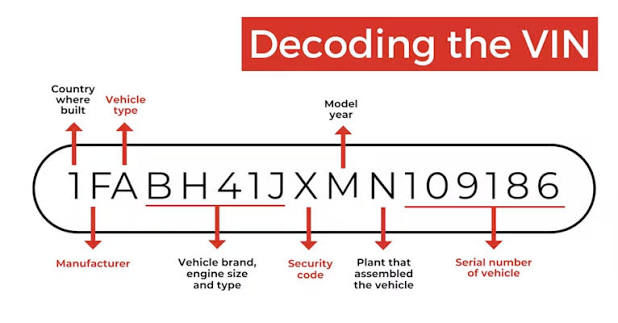
Although you don't need to memorise every character, it's useful to know that the VIN is divided into sections.
Characters 1–3: World Manufacturer Identifier (WMI)
These identify the vehicle manufacturer and the country or region where it was produced.
Characters 4–8: Vehicle Description
These often describe features such as:
Body style
Engine type
Model
Safety equipment
The exact meaning varies by manufacturer.
Character 9: Check Digit
This character is used to help verify that the VIN is valid and hasn't been altered.
Character 10: Model Year
This identifies the model year of the vehicle.
This is particularly useful when confirming that a vehicle matches the year advertised by the seller.
Character 11: Assembly Plant
This identifies the factory where the vehicle was built.
Characters 12–17: Serial Number
These digits uniquely identify that individual vehicle.
Why Should Buyers Check the VIN?
Before purchasing a used vehicle, compare the VIN:
On the dashboard
On the driver's door
On registration documents
On available service records
All VINs should match exactly.
Any inconsistency should be investigated before making a purchase.
Can a VIN Tell You Everything?
No.
A VIN is a powerful identification tool, but it doesn't automatically reveal every detail about a vehicle.
It should be used together with:
Professional inspections
Service history
Maintenance records
Vehicle history reports (where available)
Seller documentation
What If the VIN Looks Altered?
A damaged, missing, or altered VIN is a serious warning sign.
If you notice:
Scratches around the VIN plate
Loose rivets
Different fonts
Missing labels
Mismatched VINs
ask questions and seek professional advice before proceeding with the purchase.
Santonis Insight
The VIN is one of the simplest yet most powerful tools available to used car buyers.
Taking a few minutes to verify it can help you confirm a vehicle's identity and reduce the risk of costly mistakes.
Whether you're buying locally or importing a vehicle, always make VIN verification part of your inspection process.
Final Thoughts
A Vehicle Identification Number is much more than a random sequence of letters and numbers.
It provides valuable information about a vehicle's identity and can help buyers verify important details before making a purchase.
While the VIN should never replace a professional inspection, it remains one of the most important tools available to anyone buying a used vehicle.
The more you know before buying, the more confident you'll feel behind the wheel.
Looking for the Right Vehicle?
At Santonis, we believe informed buyers make better buying decisions.
If you're searching for a specific vehicle, our Find My Car platform makes it easier to tell us exactly what you're looking for.
Share your preferred make, model, budget, and requirements, and we'll help you source suitable vehicle options with confidence.
Comments