
Timing Chain vs Timing Belt: What's the Difference and Which Is Better?

When buying a used car, many people focus on the engine size, fuel economy, or mileage. However, one component that often gets overlooked is the timing system.
Most modern petrol and diesel engines use either a timing chain or a timing belt to keep the engine running correctly.
While they perform the same job, they differ in design, maintenance requirements, lifespan, and replacement costs.
Understanding the difference can help you make a more informed buying decision and avoid unexpected repair bills.
What Does the Timing System Do?
Inside your engine, the crankshaft and camshaft must rotate in perfect synchronisation.
The timing chain or timing belt connects these components, ensuring that the engine's valves open and close at exactly the right moment as the pistons move.
If this timing is incorrect, the engine may run poorly—or, in some engines, suffer serious internal damage.
What Is a Timing Belt?
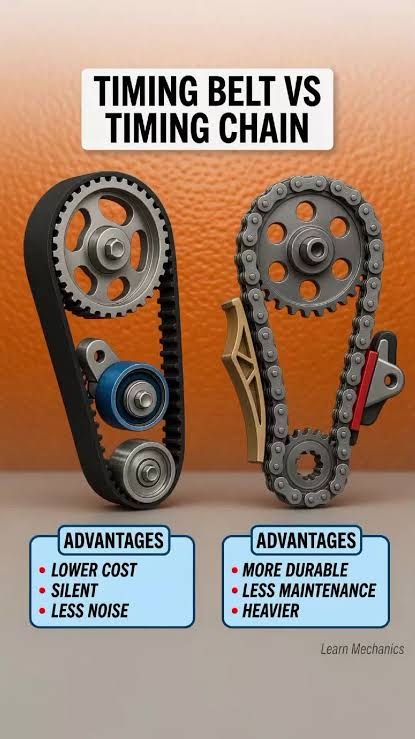
A timing belt is a reinforced rubber belt with durable teeth that synchronises the engine's moving parts.
Timing belts are lightweight, quiet, and relatively inexpensive to manufacture.
However, rubber wears over time, so timing belts require periodic replacement according to the manufacturer's maintenance schedule.
Ignoring a worn timing belt can lead to costly engine repairs if it fails.
What Is a Timing Chain?
A timing chain performs the same function but is made of metal, similar to a bicycle chain.
Timing chains are designed to last much longer than timing belts and are lubricated by the engine's oil.
Many timing chains last well over 200,000 kilometres, although they are not guaranteed to last forever.
Poor maintenance—especially infrequent oil changes—can shorten the life of a timing chain.
Timing Chain vs Timing Belt
Timing Chain | Timing Belt |
Made of metal | Made of reinforced rubber |
Lubricated by engine oil | Runs dry behind protective covers |
Generally lasts longer | Requires scheduled replacement |
Usually more expensive to replace | Usually less expensive to replace |
Slightly noisier | Typically quieter |
Which One Is Better?
Neither system is universally better.
Each has advantages.
Timing Chain Advantages
Longer service life
Usually no fixed replacement interval
Better suited for long-term ownership
Timing Belt Advantages
Quieter operation
Lower manufacturing cost
Lower replacement cost in many vehicles
The best choice depends on the vehicle and how well it has been maintained.
What Happens If a Timing Belt Breaks?
On many engines, a broken timing belt can allow the pistons and valves to collide.
This may result in severe engine damage requiring expensive repairs or even a complete engine replacement.
That is why replacing a timing belt at the recommended interval is so important.
Can a Timing Chain Fail?
Yes.
Although timing chains generally last longer, they can stretch or wear over time.
Signs of timing chain problems may include:
Rattling noise during startup
Engine warning light
Rough engine operation
Difficulty starting
Reduced performance
Ignoring these symptoms can lead to more serious engine problems.
Which Cars Use Timing Chains?
Many modern vehicles from manufacturers such as Toyota, Lexus, BMW, Mercedes-Benz, Nissan, and Mazda use timing chains on certain engines.
However, some models from these same manufacturers may use timing belts instead.
Always check the specifications for the exact engine and model year of the vehicle you're considering.
Which Cars Use Timing Belts?
Many Honda, Hyundai, Kia, Mitsubishi, Peugeot, Volkswagen, and older Toyota models have used timing belts on certain engines.
Again, this varies depending on the engine and production year.
Never assume based only on the brand.
Santonis Insight
When buying a used vehicle, ask whether the engine uses a timing chain or timing belt.
If it has a timing belt, ask whether it has been replaced according to the manufacturer's maintenance schedule.
If documentation is available, that's even better.
This simple question could save you from a costly repair after purchase.
Final Thoughts
Both timing chains and timing belts are essential parts of an engine.
While they perform the same function, they have different maintenance requirements and ownership costs.
Understanding which system your vehicle uses—and ensuring it has been properly maintained—can help you make a smarter buying decision and reduce the risk of unexpected repairs.
Knowledge before purchase often leads to lower costs after purchase.
Looking for a Well-Maintained Used Vehicle?
At Santonis, we help buyers find vehicles that match their needs while encouraging informed buying decisions.
Visit our Find My Car platform:
Tell us your preferred make, model, budget, and requirements, and we'll help you source suitable vehicle options.

Comments